Assess
We need clarity.
Understand what’s happening, what matters most, and where to focus first.
Explore assessmentsEffective technology. Better decisions. Greater mission impact.
Technology problems rarely arrive neatly labeled.
You may know something isn’t working, have a major decision coming up, need help getting a project over the finish line, or simply need someone experienced to take more ownership of technology.
I help nonprofits understand what’s really happening, decide what makes sense, and make practical progress.
No obligation. No sales pitch. Just clarity.
Start where you are
Start with what’s happening in the organization. I’ll help translate the business or operational problem into the underlying technology, process, ownership, or capacity issues and determine what kind of response makes sense.
Assess
Understand what’s happening, what matters most, and where to focus first.
Explore assessmentsAdvise
Pressure-test a decision, build a plan, or work through a difficult technology question.
Explore advisoryImplement
Add experienced technical capacity to configure, fix, improve, or move a project forward.
Explore hands-on supportLead
Add ongoing technology leadership to own priorities, vendors, projects, and follow-through.
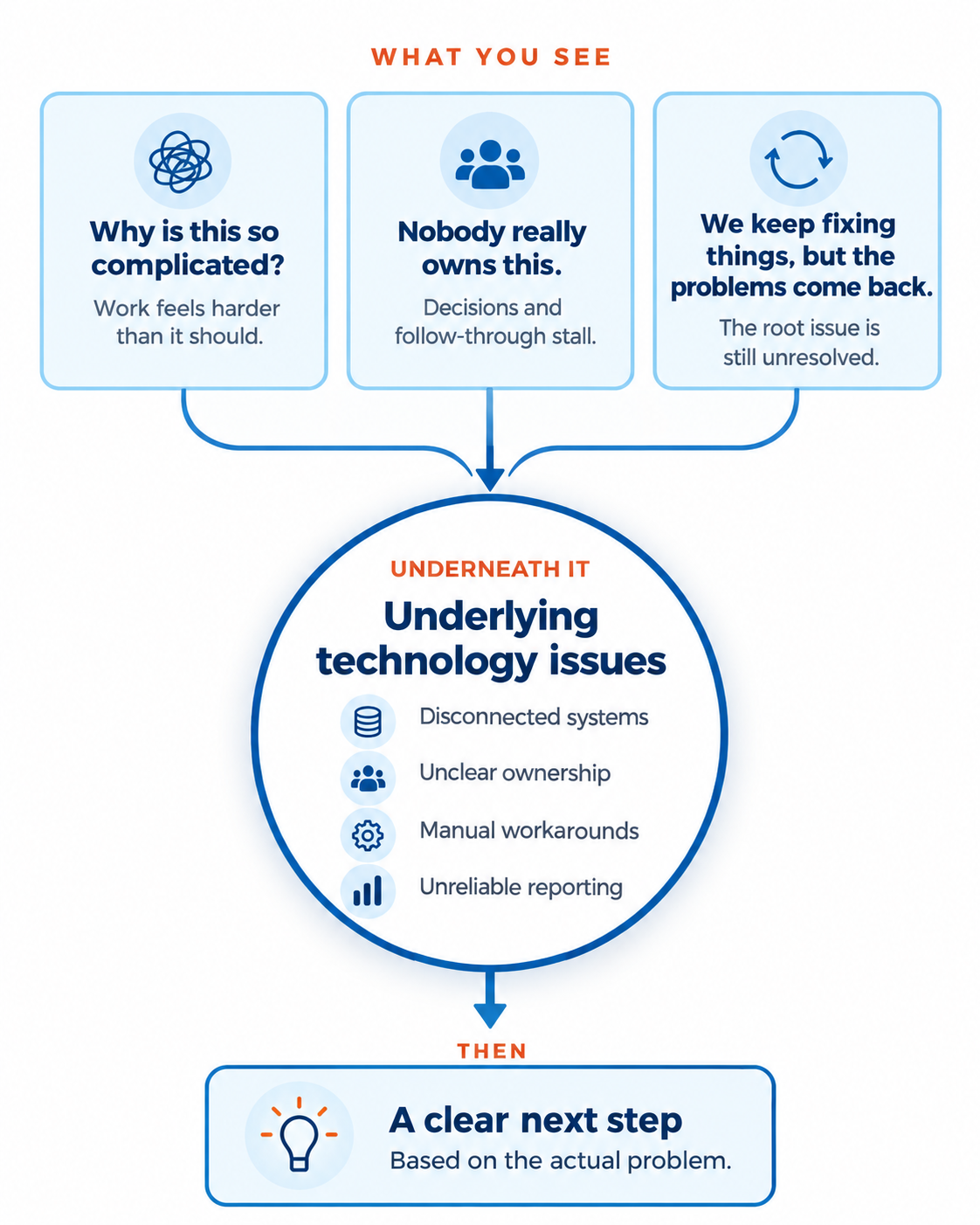
Explore fractional leadershipTechnology issues often show up first as operational friction, confusing decisions, recurring workarounds, or too much responsibility landing on the wrong people.
It looks like...
It sounds like...
“Why is this so complicated?”
“Nobody really owns this.”
“We keep fixing things, but the problems come back.”
“I know we need help. I’m just not sure what kind.”
It feels like...
Technology is taking more time and attention than it should, decisions are harder than they need to be, and staff are compensating for systems instead of being supported by them. Over time, that unnecessary friction can contribute to overload, burnout, and turnover.
Leadership + Strategy + Operations + Technology
The issue may start with a system, a decision, a workflow, a vendor, or a gap in ownership. I work across those boundaries because solving only one piece often leaves the real problem in place.
Set direction, establish priorities, create ownership, and keep technology connected to organizational needs.
Work through difficult decisions, build roadmaps, evaluate options, and plan investments.
Improve workflows, coordinate vendors, clarify responsibilities, and strengthen follow-through.
Configure systems, clean up implementations, troubleshoot problems, integrate platforms, and get projects working.
How I work
I can help with a specific decision, work alongside your team, take on hands-on technical work, or step into a broader leadership role. The level of involvement depends on what will be most useful.
Lead
Take ownership of priorities, decisions, coordination, and follow-through.
Support
Help your team think through decisions, build plans, and move work forward.
Do
Work directly in systems, configurations, implementations, and technical projects.
Technology Effectiveness Assessments
When the problems are connected or the right starting point is not obvious, an assessment provides a structured look at what is happening, what matters most, and what to do next.
Depending on the situation, that may include systems, data, workflows, governance, security, vendors, staff capacity, adoption, cost, and technology ownership.
An assessment is one starting point, not a required first step.
What you get
Understand what is actually happening across technology, operations, people, and providers.
Separate the important risks and opportunities from the things that can wait.
Identify realistic actions based on your organization, capacity, constraints, and goals.
Know what to address now, what to plan for later, and what may not need attention at all.
The next step might be advisory support, hands-on improvements, fractional leadership, another provider, or work your own team can handle internally.
Make progress without creating tomorrow’s problem
A solution can work technically and still create problems later if nobody owns it, staff do not have the capacity to support it, costs keep growing, or it adds more work than it removes.
Good technology decisions account for what happens after the project is finished, not just whether it can be done.
Questions worth asking
Who will own this?
What will it cost to operate and support?
How does it fit with the systems you already have?
Is it secure and sustainable?
Can staff realistically manage it with the time and capacity they have?
Is the decision reversible?
Are we solving the underlying problem or only the visible symptom?
The goal is not to make every project bigger. It is to solve today’s need without unintentionally creating tomorrow’s constraint.
Independent advice. Practical execution.
I don’t resell software, earn commissions from vendors, or need to steer you toward a preferred platform.
That creates room to recommend what actually makes sense for your organization, including simplifying what you already have, doing less, or spending less.
Why TechEffective is differentSometimes the right answer is...
And when the answer is to do the work
When hands-on work is the sensible next step, I can often help configure systems, improve integrations, clean up an implementation, troubleshoot problems, or move the project forward directly.
I’ve sat on both sides of the table
I’ve spent more than 25 years working with technology, including 14 years in the nonprofit sector, both as an outside consultant and implementer and as the internal technology leader responsible for what happens next.
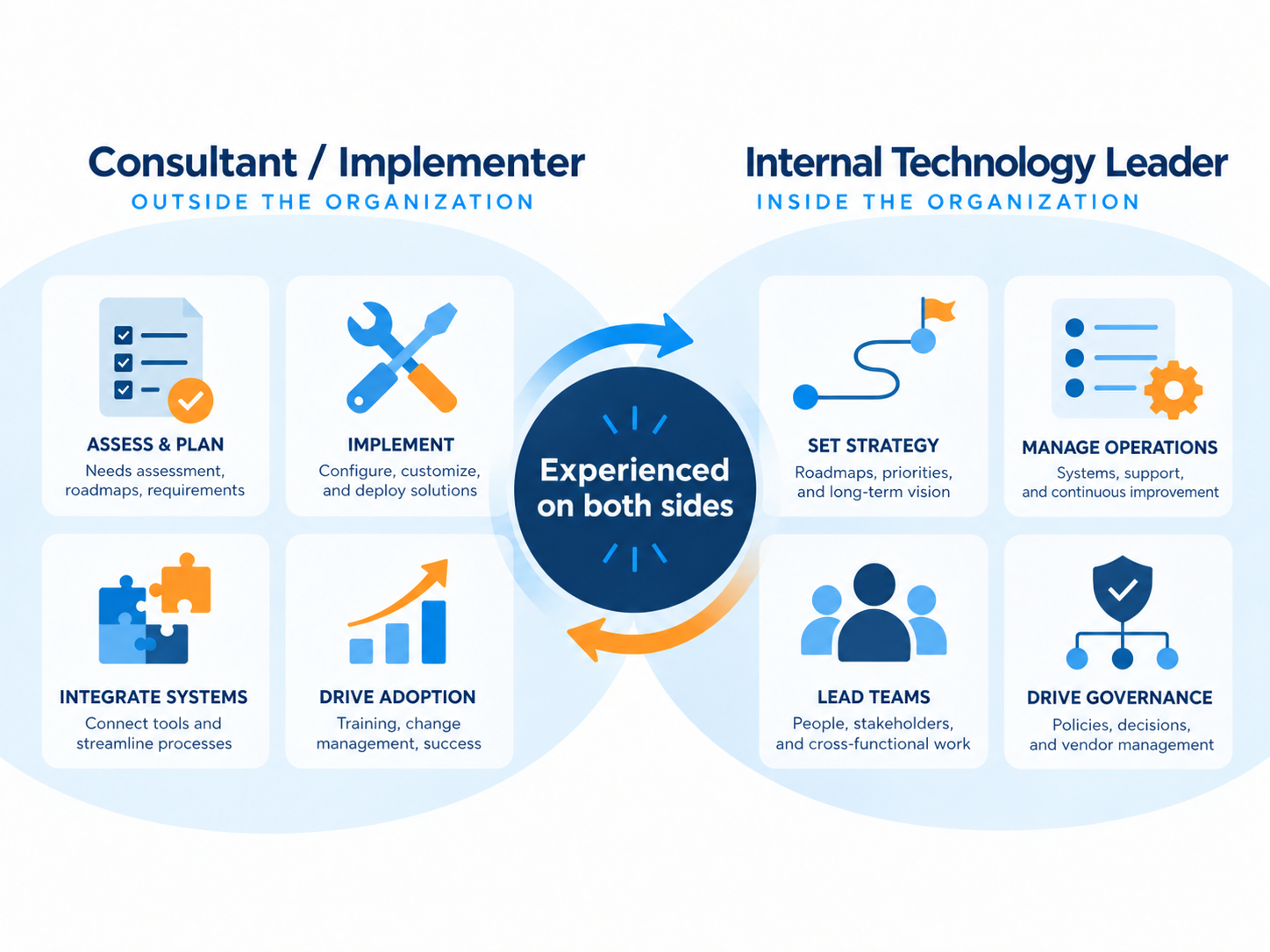
Inside the organization
As a nonprofit IT Director, I’ve owned budgets, systems, vendors, staff, projects, security, leadership expectations, and the long-term consequences of technology decisions.
Outside the organization
I’ve worked as a consultant, implementer, developer, systems professional, and advisor helping organizations solve problems, make decisions, and deliver technology work.
The solution still has to be owned, supported, explained, budgeted for, adopted by staff, and useful six months later. That perspective shapes how I approach the work from the start.
Start small
Bring the situation, decision, concern, or idea you’re working through. We can figure out what kind of help would be useful, whether I’m the right person for it, and what a sensible next step might look like.
No obligation. No sales pitch. Just clarity.